News
16.10.2026MONSTAT and the United Nations discuss further cooperation in developing official statistics and monitoring sustainable development indicators
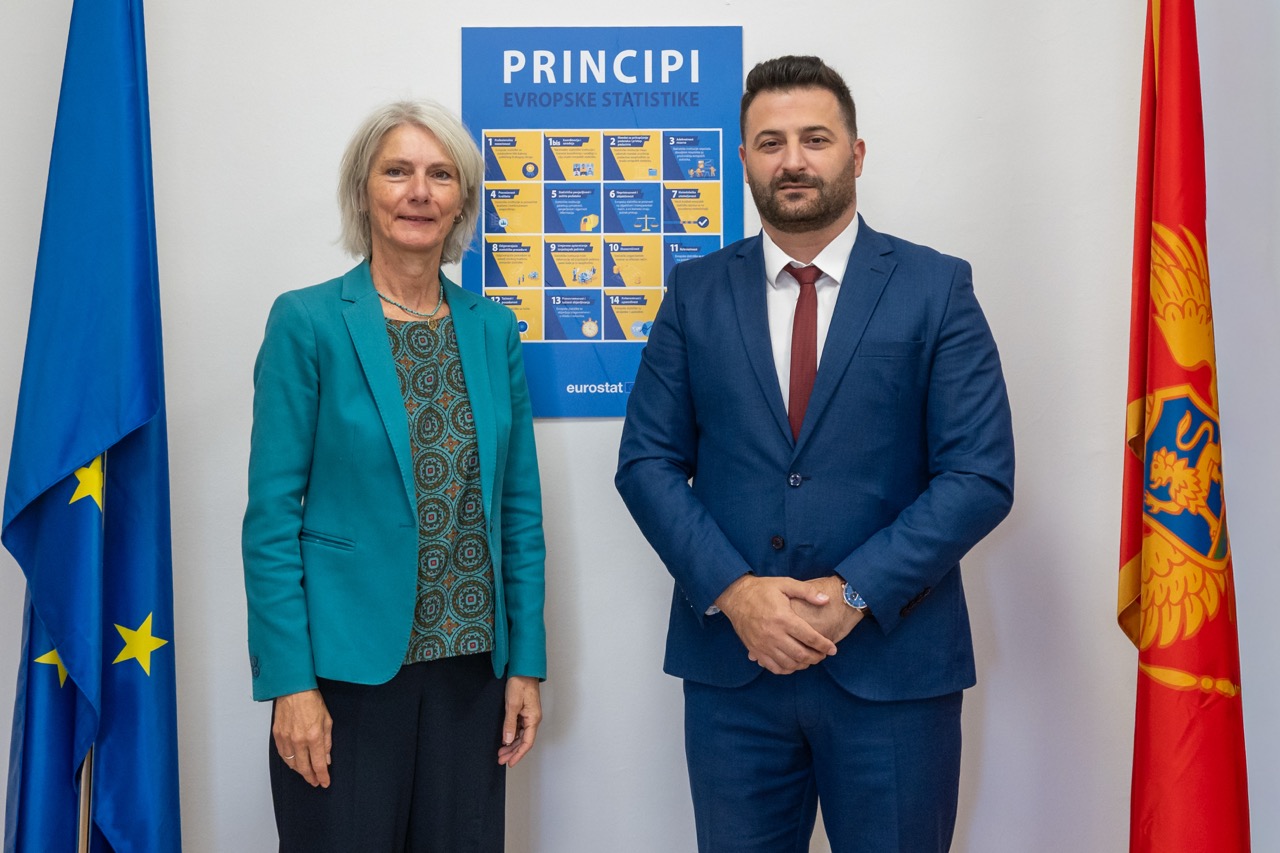
The United Nations Resident Coordinator in Montenegro, Caroline Tissot, visited the Statistical Office of Montenegro – MONSTAT today and met with Director Miroslav Pejović to discuss the results achieved and opportunities for strengthening cooperation.
Tissot congratulated Pejović and MONSTAT staff on the provisional closure of negotiating Chapter 18 – Statistics, commending them for their successful work and the progress made in aligning official statistics with European standards.
Pejović thanked her for the congratulations, noting that this result is a recognition of many years of professional work and the dedication of the staff, as well as an incentive for the further development and modernisation of the statistical system.
During the meeting, MONSTAT&39;s results over the previous period were presented, with particular reference to the 2023 Census of Population, Households and Dwellings, the 2024 Agricultural Census and the Multiple Indicator Cluster Survey – MICS 2025–2026, conducted in cooperation with UNICEF. The data collected through these surveys provide an important basis for planning future projects, assessing development needs and designing evidence-based public policies.
Particular attention was given to MONSTAT&39;s role in producing and publishing indicators for monitoring the Sustainable Development Goals (SDGs). The discussion covered ways to improve their availability and to further develop the indicators, in cooperation with other competent institutions and the UN system.3
Opportunities for future cooperation were also considered in the greater use of administrative data and preparations for a future register-based census, the analytical use of data for local development and equal opportunities, as well as digitalisation and strengthening MONSTAT&39;s professional capacities.
The meeting provided an opportunity to review shared priorities and ways to develop them further through concrete project proposals, with the aim of ensuring high-quality and accessible data for the development of Montenegro.