News
05.11.2026European Commission: Montenegro Makes Good Progress in the Area of Statistics
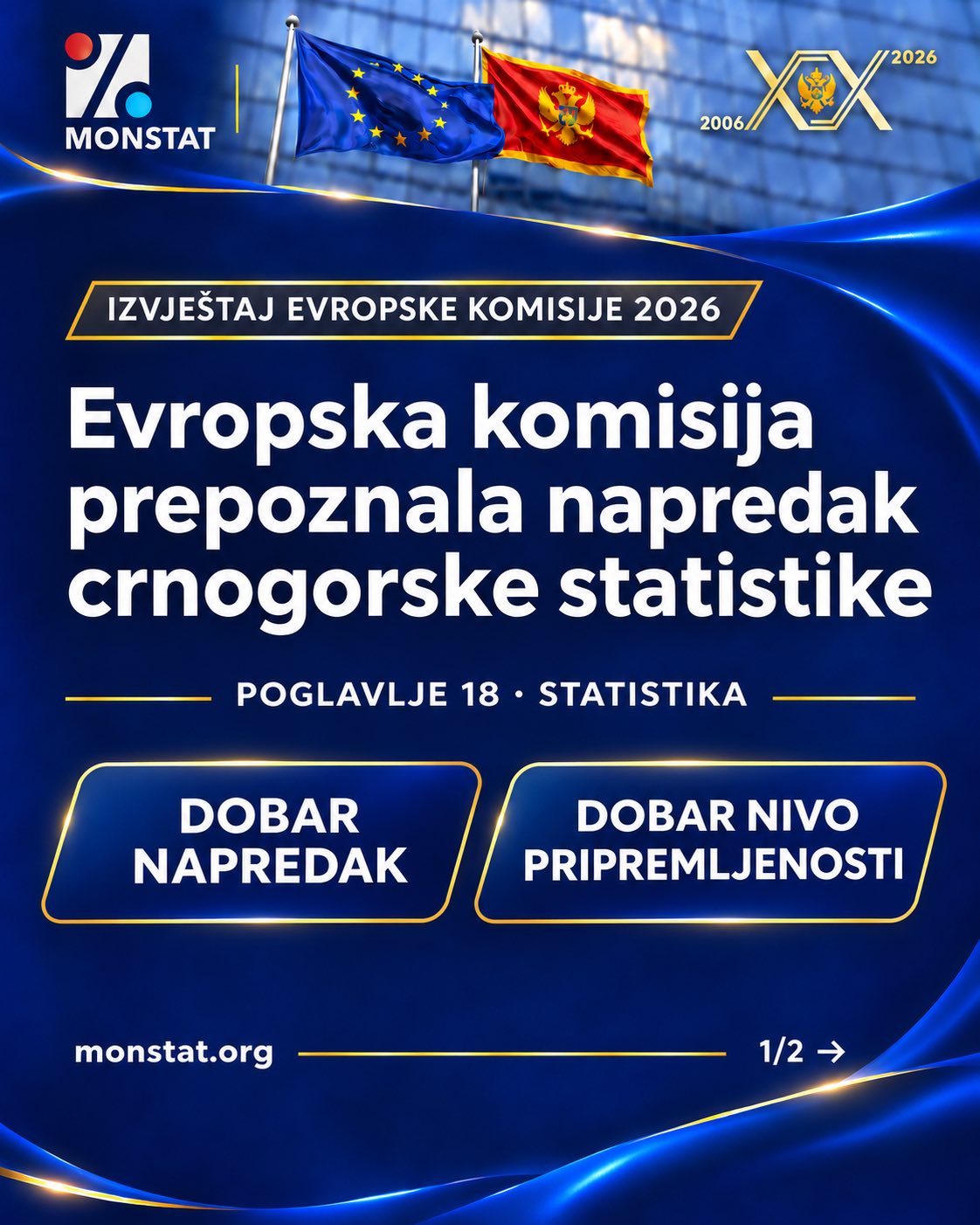
In its Montenegro Progress Report 2026, the European Commission noted that Montenegro had made good progress under Chapter 18 – Statistics and confirmed that the country had a good level of preparation in this area. The recommendations from the previous report were largely implemented, with recognised achievements in improving statistical methodologies, transmitting data to Eurostat, and increasing the production and dissemination of statistics in line with European standards.
In the area of macroeconomic statistics, particular emphasis was placed on the completion of a benchmark revision of national accounts data for the period 2006–2023, which integrated new data sources, including data from the recent population and agricultural censuses, and improved the methodology. Key national accounts data, including Gross Domestic Product (GDP), Gross National Income (GNI) and main aggregates, are produced in line with the European System of Accounts (ESA 2010).
The European Commission recognised the start of regular production of government finance statistics (GFS) and excessive deficit procedure (EDP) data in 2026 as significant progress. A roadmap was also adopted, outlining the timeline and scope for further improvements in the coverage and quality of these data, as well as measures to address outstanding methodological issues.
The European Commission particularly highlighted the significant increase in the number of datasets transmitted to Eurostat, as well as substantially improved cooperation among MONSTAT, the Ministry of Finance and the Central Bank of Montenegro. The establishment of a Steering Committee for the implementation of the ESA 2010 methodology has ensured a more systematic approach to alignment with EU requirements.
In the area of statistical infrastructure, the Commission recognised the strengthening of MONSTAT&39;s coordination role, as well as improvements to the legislative framework in line with the EU acquis. Amendments to the statistical law have enhanced access to administrative data sources, strengthened confidentiality and data protection, and assigned clear responsibilities for producing GFS and EDP statistics. Montenegro has also reached a high degree of alignment in the area of classifications and registers.
Positive results were also achieved in other statistical domains. Energy statistics is fully aligned with EU requirements, significant progress has been registered in agriculture statistics, and good progress has been achieved in transport statistics. A good level of alignment was noted in statistics on international trade in goods and services, while Montenegro fulfils the mandatory data transmission requirements of the EU acquis for the Harmonised Index of Consumer Prices (HICP).
These achievements reflect the expertise and dedication of MONSTAT employees, as well as the joint efforts of institutions within the official statistical system. The European Commission&39;s positive assessments follow the provisional closure of negotiating Chapter 18 – Statistics on 12 October 2026 and provide further encouragement to continue modernisation and improve the quality and accessibility of official statistical data.
Ensuring the sustainable continuation of this progress requires strengthening MONSTAT&39;s administrative capacity and providing adequate office space. Creating the necessary conditions for recruiting additional qualified staff and supporting their professional development, together with ensuring appropriate working conditions, is essential for the further development of official statistics and the fulfilment of obligations in the European integration process.
Source: European Commission, Montenegro Report 2026, Chapter 18 – Statistics.